Building up exercise gradually
Exercise needs to be carefully built up, even for active dogs. Running at your pace may inhibit their self-regulation, such as sniffing, checking in, and slowing down. For instance, we started with a 3k run for Mohawk’s first run and gradually increased it to a hilly 4k to allow for breaks.
Pre-run preparations
Before setting off, give your dog the opportunity to sniff, wee, and poo, and warm up their muscles for a few minutes. Allow them a few minutes to slow down and wind down before loading them in the car.
Running environment considerations
Off-lead running
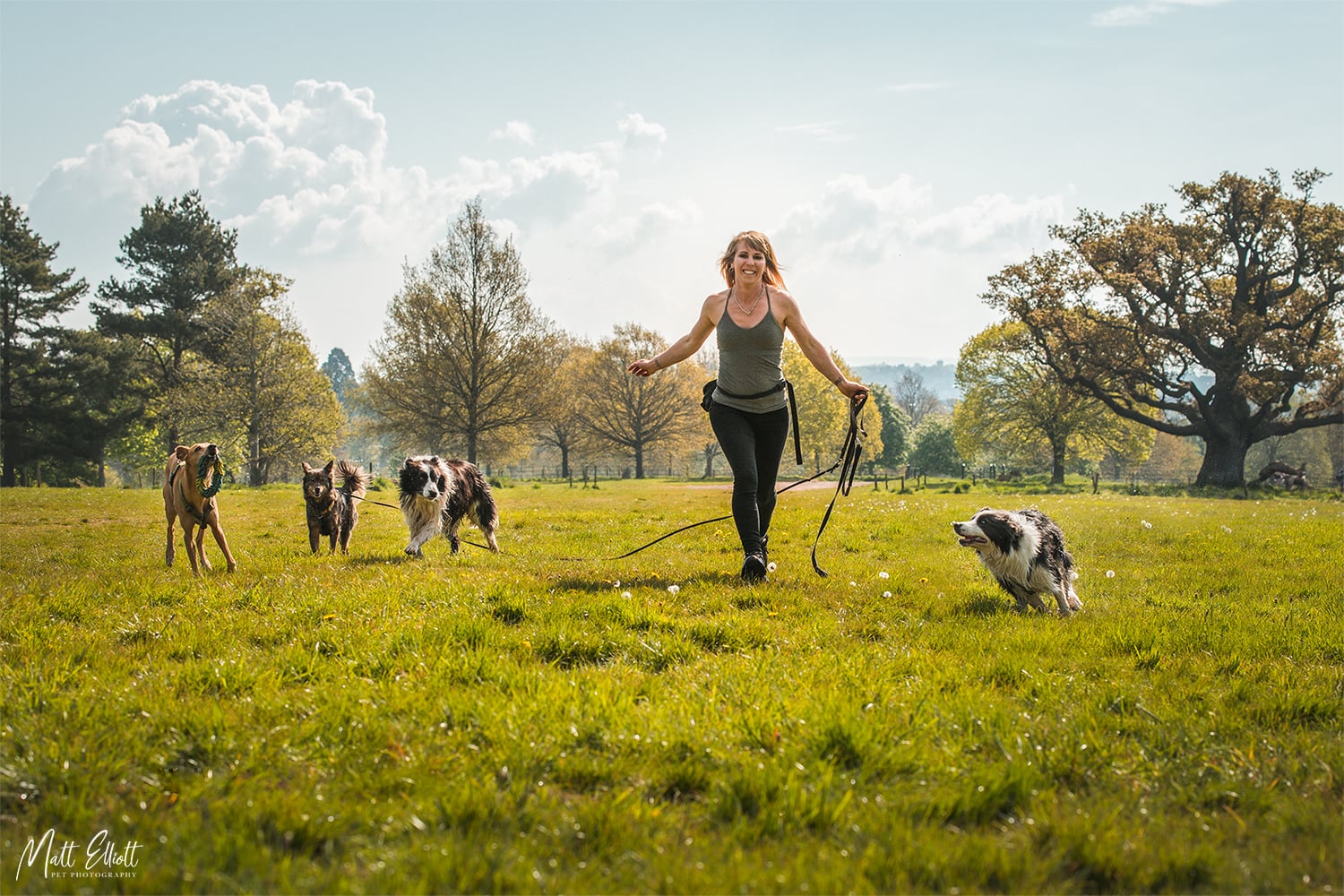
I prefer to free run my dogs so that equipment doesn’t affect their gait. Ensure your dog stays in sight at all times and avoid areas with livestock, especially if your dog has a big range or is a hunting breed.
On-lead running
If you run with your dog on a lead, ensure the lead is clipped to a comfortable harness to prevent imbalanced running. Avoid using a collar for high-impact exercise to protect their neck and delicate areas like the thyroid gland, optic nerve, jugular, oesophagus, and trachea.
Equipment recommendations
My dogs wear Haqihana harnesses
Running surface and hydration
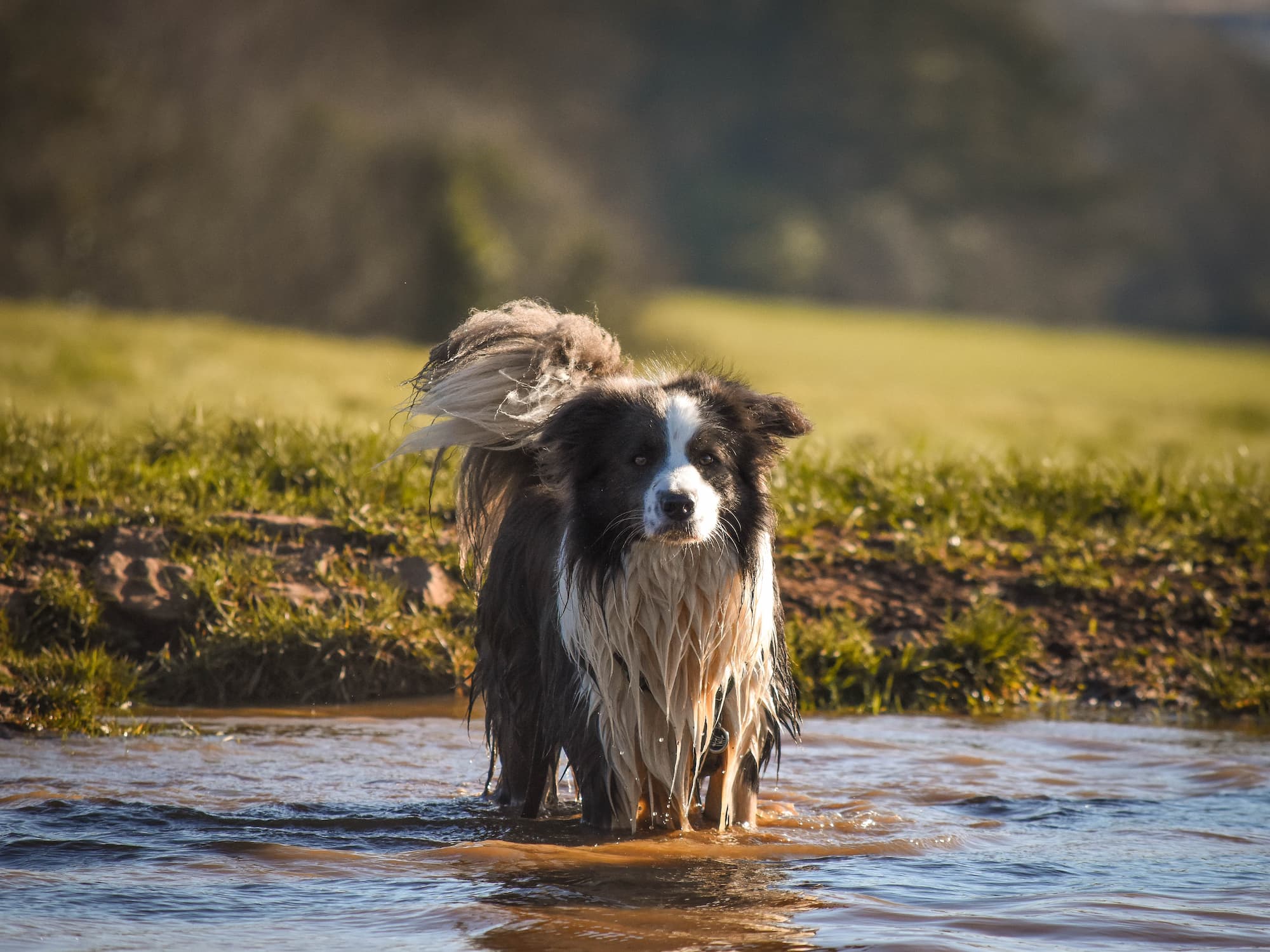
We prefer trail running on soft ground, which is better for their joints. Road running is harsh on joints, and dogs don’t get a choice of footwear. We include water in our routes for hydration and cooling down, and train our dogs to swim on cue and recall away from water for safety.
Passing other dogs and people
Wide berth
Give other dogs a wide berth or slow down to pass in narrow spaces. Avoid narrow paths when possible.
Announcing presence
When approaching from behind, talk to your dogs or call out to make your presence known to avoid startling others.
Observing other dogs
Observe other dogs from afar, looking for signs of anxiety. Avoid putting your dog in challenging situations where they may react.
Maintaining pace and recall
Take your dog on routes where giving a wide berth and keeping to yourselves is possible. A good recall is crucial to call your dog away from others, ensuring they don’t trip or startle anyone. Train your dogs to come close, slow down, or stop on cue as you pass others.
Monitoring and rest
Keep an eye on your dogs to spot when they need to toilet or are struggling to keep up. Run with your dogs once or twice a week, allowing 3-4 days of rest in between to let their muscles and physiology recover.
Monitoring for pain
Monitor your dogs carefully for signs of pain or gait abnormalities. Avoid running with them if they show any signs of discomfort. Ensure they receive routine physiotherapy.
Prioritising safety over personal bests
When running with dogs, your focus should be on their safety and happiness rather than personal bests or Strava achievements. Be prepared to slow down to keep them and other dogs safe.
Conclusion
Running with your dog can be a delightful experience when done correctly. By gradually building up exercise, creating a safe environment, using the right equipment, and being mindful of your dog’s needs, you can enjoy many happy runs together. Remember, it’s about their well-being and enjoyment as much as it is about your exercise routine.