What to do if your dog gets into a fight or is attacked
Conflicts and or attacks do have the potential to really knock a dog’s confidence and can even result in the onset or escalation of a behaviour problem, such as becoming over reactive, anxious avoidant, or defensive during up close interactions.
Risk factors to be aware of
Certain situations increase the likelihood that a dog-dog conflict may have a lasting emotional impact.
Risk factors include:
- Prolonged attacks or fights
- Attacks or fights that result in injuries
- Incidents involving dogs who have existing behaviour problems
- Incidents involving dogs who are already low in confidence, have a pessimistic bias, or are anxious and likely lacking resilience
- Incidents involving dogs with health problems or who are in pain
- Incidents involving dogs who are already stressed by something or in a state of stress recovery
For example, they may be struggling in that particular walk environment, or have recently been stressed by fireworks, vet visits, visitors, and so on.
When a conflict does not have to become a big deal
In many instances, a brief dog-dog conflict does not have to become a huge deal. How we respond in the moment and afterwards can make all the difference.
What to do immediately after
- Stay as calm as you can.
Having a huge slanging match with the other dog’s owner is not going to help your dog be less stressed. - If appropriate, allow the dogs involved to calm down in one another’s presence.
Ensure there is enough distance between them to enable all dogs to lower their arousal easily. - Help stabilise your dog’s blood sugar levels with some treats.
A significant stressor can rapidly deplete energy, which in itself makes it harder for dogs to cope with stress. - Make sure your dog does some fun things before they next go to sleep.
- Make sure your dog rests well once home.
The next 24 to 48 hours
- Give your dog quiet walks for 24 to 48 hours afterwards.
Even if there are no observable injuries, there may be sore muscles and additional time needed for stress recovery. - Manage or avoid exposure to other stressors such as vets, groomers, or visitors carefully during this period.
- Carefully monitor social interactions for a few days, particularly your dog’s responses to dogs of a similar profile to the opponent or aggressor.
- After more serious incidents, arranging walks with established dog friends or controlled set ups with other dogs is often better than relying on chance encounters.
A real-life example
For those who enjoy reading more, here is some additional context.
On our walk this morning, a large dog took serious umbrage with Mohawk having testicles. No one was particularly at fault. Neither dog had much time to avoid one another and, on initial glance, there was no obvious reason for concern as they approached one another on the same path.
Everyone looked pretty relaxed until Mohawk’s musk wafted up the other dog’s nostrils.
As is the case with most dog-dog conflicts, it was largely a display of noise and body barging. Mohawk was caught off guard and pushed down, but eventually had little choice but to stick up for himself once the opportunity arose, using ritualistic behaviour such as barking, air snapping, charging, and pushing back.
Whilst conflicts between dogs can feel like they go on for ages, more often than not it is only a few seconds before someone yields and things diffuse, or a handler steps in, as happened today.
Once the other dog was restrained by his owners and Mohawk and Amigo were back by my side, I asked the owner, who I happen to know a little, not to rush off.
Thankfully, everyone stayed very calm during the incident itself. There was no shouting from either party. No one got angry with the dogs or with each other. These things happen.
We all quietly found a distance where the dogs were no longer anxious about one another and spent a couple of minutes there allowing their arousal to lower.
Neither dog was straining to get to the other. No one was shooting daggers or anxious glances. The distance meant all dogs were aware of one another without perceiving one another as a threat.
Once their arousal had settled, we both went on our way. The final experience all dogs had with one another present was neutral at worst, or mildly positive with strokes and treats at best.
Supporting recovery afterwards
We then resumed walking with two other dogs who had moved away from the drama and waited for us. This provided Mohawk with a little distraction and social buffer. I carefully watched his behaviour around them in case the stress made him more anxious, but he was absolutely fine.
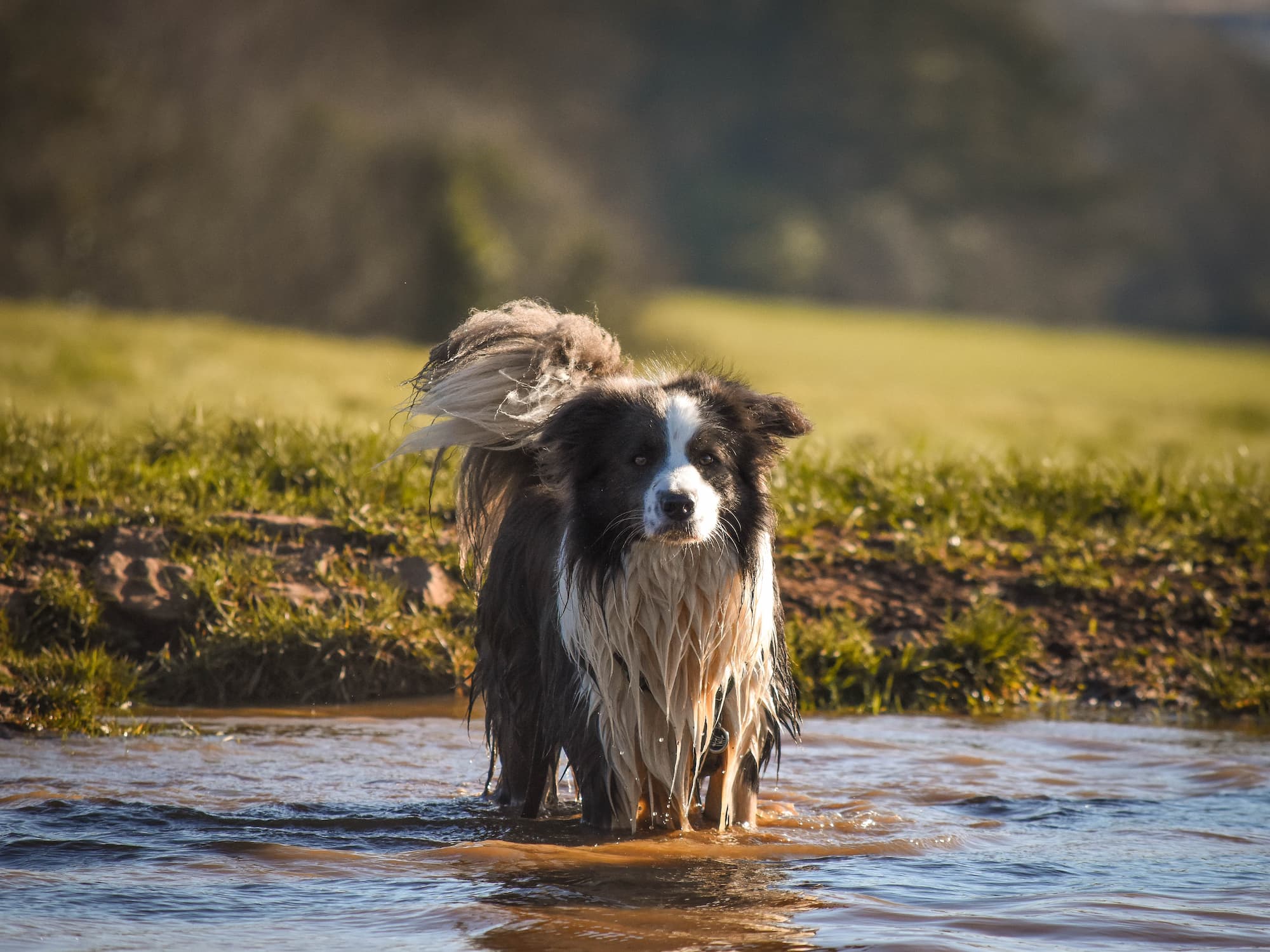
Once we parted ways, we did our usual fun activities on the way back to the car. We went to the pond, which Mohawk loves, and did a couple of repetitions of searching for a toy once Kanita was back in the car.
By engaging in positive activities after the incident, I reduced the likelihood of Mohawk consolidating the negative experience in his memory.
Of course, he may remember that specific dog, and I need to be mindful of how he responds to dogs with a similar profile over the next week or so. Staying calm, not leaving the context in a heightened state of stress, and doing some enjoyable activities afterwards all support him in not forming strong fear based memories of the event.
When conflicts feel scary
To inexperienced dog owners, or to those with previous negative experiences, dog-dog conflicts can be incredibly frightening.
For those working hard on their dog’s social behaviour, they can create huge anxiety about all that progress being undone.
Staying calm and resisting the urge to give the other owner a piece of your mind is not always easy, particularly when a dog’s behaviour is seriously offensive, such as charging across a large distance to attack your dog.
If your dog is injured
If injuries have been sustained, staying calm is understandably much harder, but do your best to remain as calm as you possibly can.
If your dog is clearly in pain or distress, it is not advisable to remain near the attacker in the hope that your dog may calm down, nor should you expect them to engage in training or games.
If your dog is in pain, calmly getting them to safety is advisable.
If injuries are minor, see whether your dog is able to enjoy some food enrichment once home, such as treat searches, lickimats, or chews. If they seem up for a small amount of gentle training, that is fine, but do not pressure them to do anything they do not appear motivated to do.
Doing these activities before your dog sleeps helps reduce the likelihood of the negative experience being consolidated into memory.
If veterinary treatment is required, and depending on the severity of the injuries, allowing some time for rest before attending the vet can be helpful. This avoids your dog going straight from one highly stressful situation into another.
Avoid waiting in the vet’s waiting room with your dog. They are unlikely to have the resources to cope with other dogs in close proximity in an environment already associated with stress. Waiting in the car or a quiet spot outside until your vet is ready to see you is often far more supportive.
Should you reassure your dog?
As with most things, it depends on how serious the incident was.
When dogs are more distressed, particularly immediately after an attack or serious fight, they may seek and need more reassurance. Feeling accepted and supported by their social group can help them feel safe again.
In some instances, dogs may not seek reassurance or may not find it helpful.
Mohawk immediately came to me for some support and strokes once the other dog was restrained, but I did not excessively reassure him. He knew I was there, but I did not want him to think there was a bigger problem than there actually was by overly worrying about him.
Once home, he had his normal level of cuddles if he asked for them. Everything else was business as usual. I did not constantly check on him or provide extra reassurance when he was not asking for it.
Provide reassurance if your dog seeks it, but be mindful that your reassurance is genuinely perceived as comforting. Our own residual stress and concern can easily come across as anxiety, and behaving anxiously is unlikely to help our dogs feel safe again.