Reframing the question
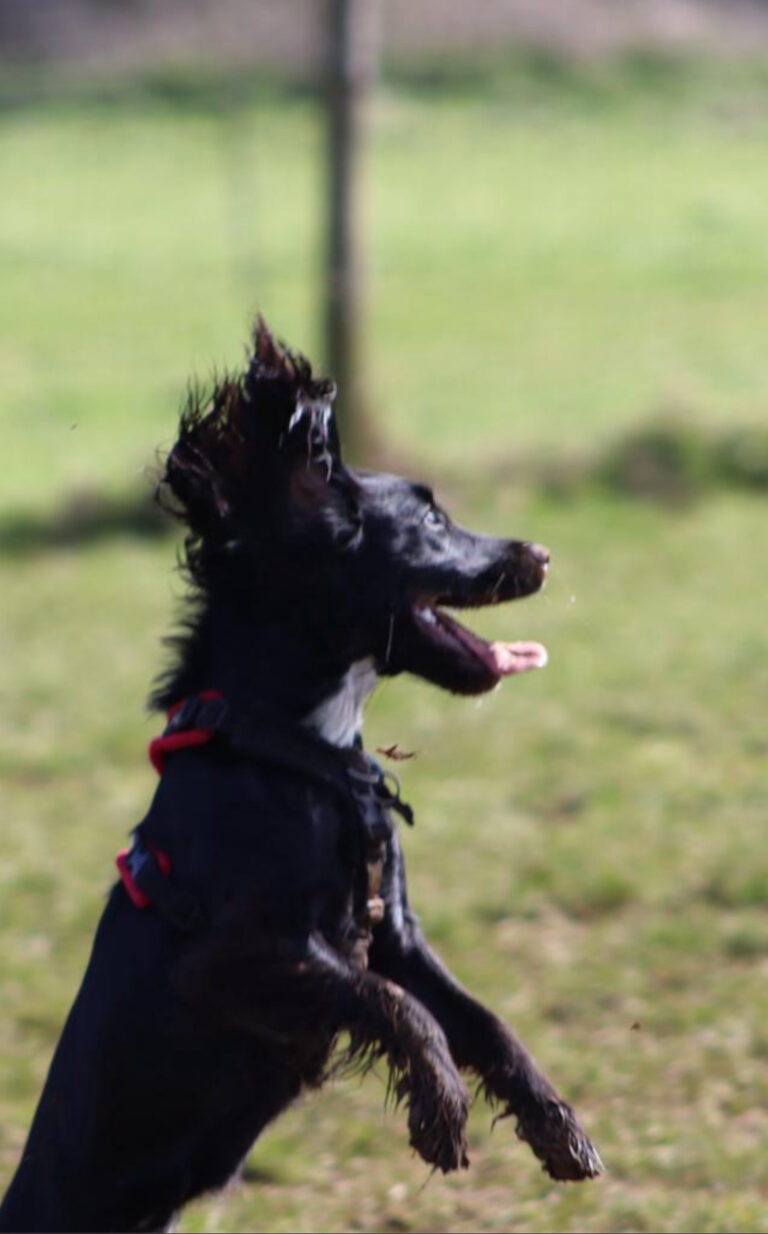
The answer to stopping your dog from jumping up lies in rephrasing the question. It should be: “How do I stop people overstimulating or overwhelming my puppy, causing them to jump?”
Managing puppy interactions
While some dogs may jump up regardless of people’s actions, it’s crucial to manage how people behave around puppies who jump during greetings. Many people loom over, tickle, stroke the head, and use excitable phrases like ‘oooooh puppy puppy’. Puppies are cute, but your puppy shouldn’t have to tolerate intense interactions from strangers initially.
Strangers should be taught to interact with unfamiliar dogs appropriately. The assumption that all puppies want or benefit from strokes and cuddles is incorrect. Some find unfamiliar people scary, while others may get overstimulated and respond by jumping.
Training techniques for greeting behaviours
Establishing boundaries
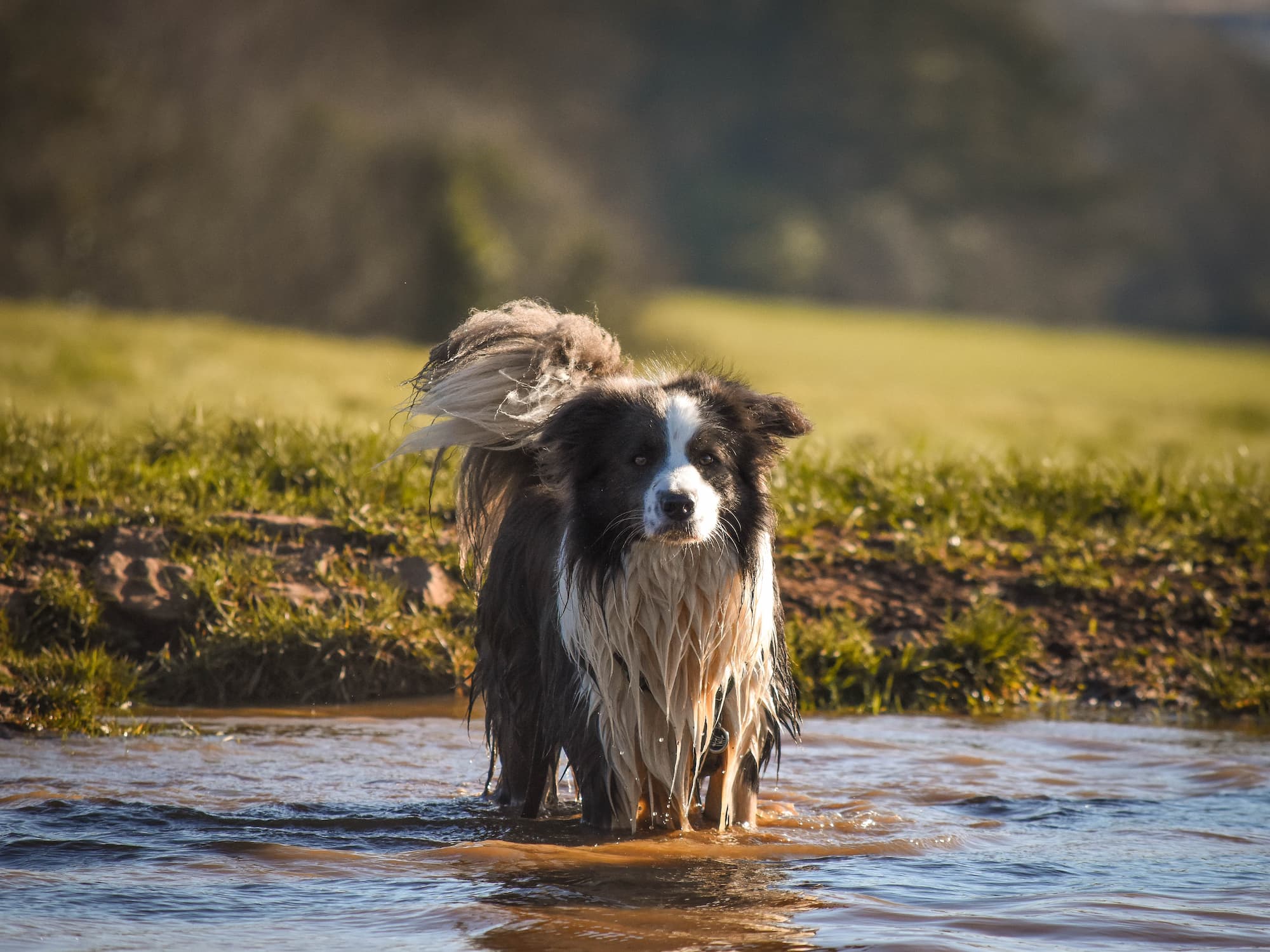
On our puppy walks, everyone who approached Mohawk was asked to ignore him completely before he even approached them. If they complied, I stayed nearby and guided them on how to stroke him when he was calm. If they ignored my request and tried to stroke him, I recalled Mohawk away.
Here’s an example of what I said to people:
“Hiya, if my puppy comes over, please don’t stroke him, just ignore him! Thanks so much. I don’t want him to learn to jump at people. If he jumps, please step away so I can recall him. Thank you, you’re doing a great job of ignoring him. When he calms down, I’ll show you how to stroke him without him jumping.”
When he calmed down, I would guide them:
“You’ve been so helpful, thank you. Now that he’s calmer, if you’d like to stroke him, please do it on his chest, below his neck, and between his front legs. Many dogs find being stroked on top of the head unpleasant! Thank you for helping me train him. I’m going to recall him now, so please stop stroking him.”
Interacting with children
When children were involved, I would ask, “Would you like to help me train my puppy?” This usually got them on board. I then explained the importance of standing still, staying calm, avoiding outstretched hands, and letting the puppy choose to approach.
Children need to learn how to behave around dogs. This lack of awareness is why most dog bites happen on children’s faces and hands. I reinforced their behaviour heavily:
“Oh my goodness, you’re doing such a good job of being a tree. We don’t want doggies to be scared of children, do we? Standing still helps them want to be your friend, and you’re doing such a good job of that.”
Managing interactions with strangers
Countless strangers don’t need to handle your puppy for socialisation. Too much attention can make nervous dogs escalate distance-increasing behaviour. If your dog or puppy shows no signs of wanting to approach, don’t make them.
When I carried Mohawk, I never let anyone stroke him. He couldn’t communicate his feelings while being carried, and outstretched hands to the head are often aversive to many dogs.
In busy places, nervous puppies receiving unsolicited human contact can become reactive on walks, stop wanting to walk, or generalise reactivity to other triggers. They may cease to sniff and explore and stay on high alert.
Breeds and behavioural tendencies
Certain breeds may be more prone to vocalising or being aloof and suspicious, such as Mini Schnauzers, Miniature Dachshunds, Chihuahuas, Mastiffs, Akitas, Shiba Inus, and German Shepherds. Extra care is needed in managing interactions for these breeds.
Handling highly social dogs
Highly social dogs can become overstimulated by people and come to expect attention, leading to pulling, barking, and other high-arousal behaviours. This often applies to poodle crosses, which are frequently approached by people.
The key is to view your dog as an individual and tailor their socialisation plan to their specific needs. Go at their pace and place them in environments where they can remain calm.
The best socialisation approach
The best thing strangers can do to help socialise your puppy is to ignore them. Politely ask people to ignore your dog. Should your adult dog jump on people or bark and growl, they’ll be far more upset than if they were asked to ignore the puppy initially.
By managing human interactions and training your dog properly, you can prevent jumping and ensure calm and positive greetings.