Settling-in period
Stress inhibits learning and appetite, so your puppy may need some time to adjust to their new home after relocating.
Reinforce what you like from the start
Tune into unprompted behaviours you like, such as waiting patiently for their toy or food, and reinforce these. Avoid reinforcing behaviours you don’t like. Remember, not reinforcing a behaviour is not the same as correcting it. You don’t need to say ‘ahh ahh’, ‘down’, ‘off’, or ‘no’ to your puppy. These tend to be meaningless sounds unless paired with something aversive, which can damage your relationship. Instead of correcting undesired behaviour, try to prevent it from happening in the first place.
Start with priority behaviours
When your pup can focus for short durations, begin training priority behaviours. My priority behaviours for Mohawk are:
Conditioning his name
Ensure your puppy responds to you when you call their name.
Food manners
Teach your puppy to practise self-control around food.
Handling (grooming)
Train your puppy to be comfortable with brushing and nail trimming.
Hand target
Teach your puppy to move from A to B without being picked up.
Recall
Ensure your puppy stays under control on walks.
Drop
Train your puppy to drop items, preventing them from eating dangerous objects and letting go of your clothes. This also helps develop self-control.
Getting used to lead and harness
Introduce small bits of loose lead walking.
Settle
Teach your puppy to stay calm and focused in certain contexts, including standing settle on walks.
Raising criteria and adding new exercises
Once these behaviours take shape (across approximately 3-4 weeks), raise the criteria by increasing the distraction level. This includes practising self-control around toys. Add more exercises, such as ‘stop’, ‘stay’, and auto-leave.
Proofing and generalisation
Training your dog to respond to behaviours in all environments and contexts takes time. Focus on training a solid recall and ‘drop’ that works reliably, rather than adding numerous novelty behaviours which dilute the quality of training. Unless you have ample time, a highly motivated pup, and advanced training skills, it’s best to concentrate on what truly matters.
Top five training priorities
If I could give puppy owners just five things to work on, they would be: recall, drop, loose lead walking, handling, and settle.
Socialisation
- Drop your expectations for the first few walks; don’t overly cue your dog while their brain processes new information.
- Once you see habituation (not reacting to benign things in the environment) and increased confidence, start incorporating training.
- Identify when during the walk training will work best (start, middle, or end). It’s usually in the middle and towards the end if your pup isn’t too tired.
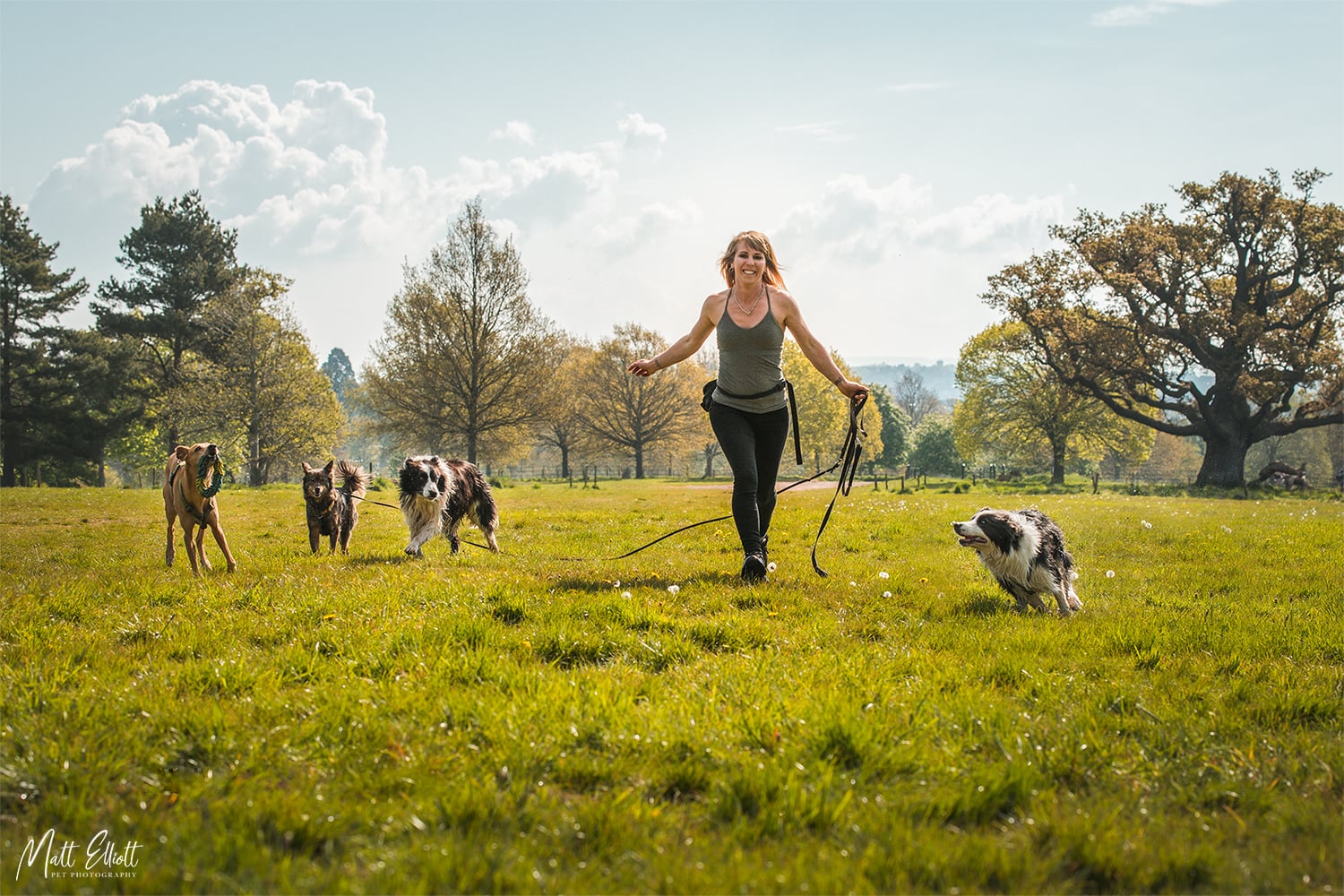
- Set your puppy up to succeed by not walking them in overly stimulating environments. I street walk Mohawk about 3-4 times a week (out of 14). Pups benefit from less intense walks on a longline as often as possible.
- Walking your puppy on a longline more often can help your loose lead walking succeed. Consistency twice a day, seven days a week, in a high distraction environment (the street) is challenging and will likely result in a high failure rate (partially due to trainer error from training fatigue).
- Gradually increase the distraction level around your puppy on walks, interspersed with ‘dog time’ breaks where you don’t verbally cue them and let them explore and observe the world around them.
Troubleshooting
Remember, if your dog fails to respond to you, it’s a training issue, not because your dog is stupid, stubborn, or manipulative. You may not have trained the behaviour to the level you’re asking of your dog, or you need to problem-solve with motivation. If you get stuck, seek help from an accredited trainer under the ABTC, APBC, CCAB, or APDT.
By following these guidelines, you can ensure your puppy’s training is effective and enjoyable, leading to a well-behaved and happy dog.