About 10 years ago, I used to recommend most of my reactive dog cases take a 2–3 week break from walks to lower the stress caused by reacting to triggers throughout the day.
This served as a ‘re-set’ period for the dog. Back then, it seemed to work. Many caregivers reported their dogs sleeping more after a day or two of adjusting, and their return to walks being more productive.
Despite this previously successful strategy, I now very rarely recommend people stop walking their dogs for a prolonged period of time.
Here’s why – and what I recommend instead.
Why I no longer recommend long breaks from walks
1. Limited space at home
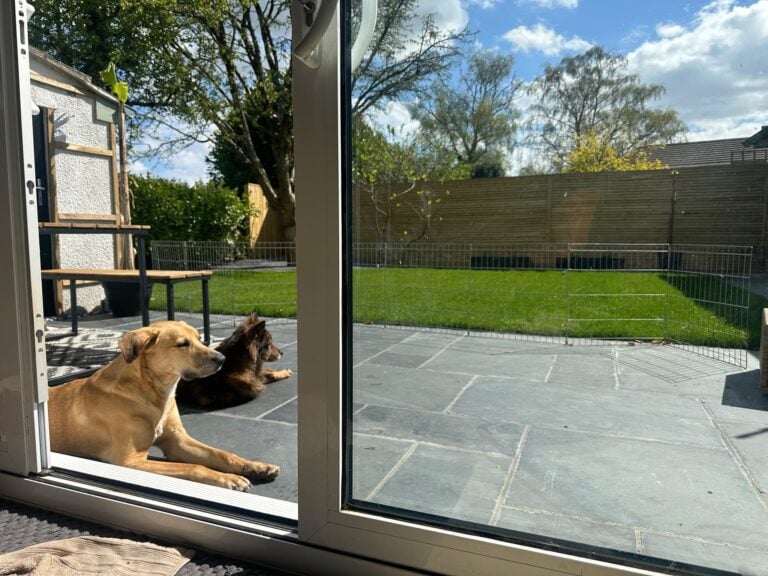
The average home and garden in my city isn’t huge. While it’s not a welfare concern, it also doesn’t provide enough space for dogs to meet their physical exercise needs.
Most pet dogs don’t need to be uber-fit, competition-level athletes, but they do benefit from regular physical activity to help manage weight and maintain mobility.
2. Routine disruption can be stressful
Many dogs thrive on routine. While it’s helpful for them to be adaptable to some change, going from several outings a day to none is a huge shift — and that alone can be a stressor.
Mental stimulation can only go so far, and it’s asking a lot of caregivers to keep this up at a level that’s sufficiently enriching over a prolonged period.
3. Reintroducing the outside world can cause issues
After a long break, everything outside may feel novel — which can lead to sensory overload, over-arousal, or intense pulling on the lead.
If a dog reacts out of pro-social frustration (i.e., wanting to get to other dogs), a break is unlikely to reduce this motivation. In fact, it may increase when they finally see another dog again.
4. Resource guarding and sensitivity to change may increase
Confining a dog to a small space can increase the value of resources in that space — which can be risky for dogs who have guarding tendencies.
It can also make dogs more sensitive to environmental changes, such as external noises. For some dogs, boredom or other factors may increase reactivity to these changes, creating additional stress.
5. Problem behaviours at home can intensify
If a dog already exhibits concerning behaviour towards their caregivers at home, keeping them in a confined space with no outlet can escalate these behaviours.
When I do recommend a break from walks
While prolonged walk-free periods are no longer my go-to, there are still some situations where I may recommend a short reset (usually 2–3 days):
1. The dog is content staying home
Some dogs may already avoid walks or seem relieved not to go out. In these cases, we might need to work slowly to build their motivation and confidence to leave the home on their terms — without flooding them.
2. Walks are clearly a major stressor
If it’s obvious that walks are causing significant stress, a short break may help the dog recover and reset emotionally.
3. The home is a sanctuary
A break only works if the home is truly a place where the dog can relax and decompress.
What I recommend instead of long walk breaks
Rather than stopping walks altogether, here are some alternatives I often recommend:
1. Use secure fields
If walking from the front door is consistently difficult, secure dog fields (if accessible) offer a safe space to practise calm, low-pressure behaviours like mooching and sniffing. These experiences can carry over to help improve local walks.
2. Choose quieter routes
Reviewing walk locations can make a big difference. Temporarily choosing quieter areas helps lower arousal and allows the dog to build foundational behaviours in a less triggering environment.
3. Reduce walk frequency or duration
Most dogs enjoy two daily outings — but quality trumps quantity. It’s better to have one or two short, enriching walks than long, stressful ones or none at all.
4. Adjust what happens during the walk
Some walks are simply too intense. Common issues include:
- Too many high-intensity games
- Constant training without time to decompress
- Rushed pacing
- Pulling that worsens pain or tension
Dogs in pain (e.g., musculoskeletal issues) may need gentler, slower-paced walks. Others may be frustrated by the lack of off-lead freedom. Secure fields can help here too.
It’s often not the walk itself causing the issue, but how the walk is experienced.
Rest days are still useful
Rest days can be beneficial for managing pain and stress — for both dogs and their caregivers.
However, they’re not the same as defaulting to prolonged walk-free periods in response to behavioural issues. If a dog needs to get out, it may be more appropriate to adjust the nature of the walk rather than avoid it altogether.
Reactions can be reduced without staying indoors
Avoiding busy environments for a short while, or taking the occasional rest day, may be enough.
In some cases, a longer reset is needed for physical and emotional recovery. But the home environment and the dog’s individual needs should be assessed before making this decision.
A holistic approach works best
Reducing reactivity and improving walk experiences often requires more than just rest. It involves:
- Teaching dogs new skills
- Adjusting walk expectations and environments
- Ensuring the dog’s home life supports their emotional wellbeing
If we’re not careful, long periods indoors can backfire and lead to a rebound effect.
A thorough assessment of the dog and their environment helps us find sustainable changes that promote long-term progress.