The vast majority of dogs in the UK live in single-dog households. Social opportunities, from whatever age a puppy or dog was acquired, are often obtained through chance encounters with unfamiliar dogs on walks.
Living in a multi-dog household does not automatically make a puppy or dog better able to cope with chance encounters.
For most dogs, meeting unfamiliar dogs is initially underpinned by anxiety to some degree, due to not knowing the other dog well enough to feel completely safe.
Relying on chance encounters for social skills development and maintenance can backfire for many dogs. Because most social experiences in this context are so brief, there is little opportunity for anxiety to decrease.
For puppies or dogs who are fearful or lacking confidence around other dogs, relying on chance encounters with unfamiliar dogs can result in an escalation of behaviour.
Young dogs kept on leads or long lines until their recall is reliable can become frustrated by a lack of opportunities to move freely whilst interacting with others.
Large, boisterous, or over-exuberant dogs can also become frustrated when held back from social experiences. Alternatively, not managing their interactions at all can result in frequent corrections from unfamiliar dogs. These corrections may increase in intensity (and risk of injury) as the dog becomes larger, stronger, and more intense in their behaviour.
Over time, dogs may begin to anticipate corrections and enter interactions with a pessimistic mindset. This can result in tense behaviour that prompts the very conflict they expect.
So, what do we do? How can we try to get things right?
Build healthy social foundations
Arranging prolonged social experiences with the right dogs is the foundation of healthy social behaviour. Prolonged experiences allow anxiety or frustration to decrease, provided the interaction is well managed and with suitable dogs.
Choosing the right dogs
For nervous dogs, the right dog is often a more neutral individual who is more focused on the environment than on socialising. Nervous dogs often prefer to follow, so the other dog needs to be comfortable leading while the nervous dog follows behind initially.
For social and playful dogs, the right companions are those who may engage in some play but also know how to regulate themselves, not just through play but by engaging with the environment as well.
Constant wrestling, unless very inhibited (low intensity, low energy, and goofy), can shape behaviour that becomes problematic over time. Caution should be taken when pairing playful dogs of a similar age, size, and play style, as play can easily become too competitive.
For dogs that enter interactions with a pessimistic mindset, relaxed and confident dogs who are largely neutral and communicate through a graded scale (rather than explosive corrections) are often beneficial. Some pessimistic individuals also do well with dogs who give very clear pro-social or friendly signals.
Manage dog-to-dog introductions and interactions carefully
Gradually bringing dogs closer together through parallel walking on lead, and decreasing distance as they demonstrate the ability to regulate themselves (sniffing, disengaging easily, and so on), is key.
Allowing dogs to pull intensely on lead into an interaction is not sensible. Learning to walk on a loose lead around other dogs is a valuable skill.
The more anxiety or tension present, the more support dogs are likely to need from their owners. Recall dogs away for breathers or breaks until they are noticeably more relaxed at closer distances.
If both dogs are relaxed, you can allow more freedom to mingle by letting them off lead, or by allowing a lead to drag if extra management is needed.
If dogs are playing in a healthy way, where neither is trying too hard and both respect each other’s space, give them opportunities to interact with minimal interference. Monitor intensity closely, and if dogs struggle to regulate themselves (more common in adolescents), calmly step in and help them disengage for a brief break.
Choose supportive environments
Choosing environments where dogs can be let off lead or where long lines can be dropped without risking loss of control is important.
Also consider how different environments affect your dog’s behaviour. Does the environment promote vigilance and excessive focus on other dogs?
Walks should encourage exploration and sniffing rather than constant focus on other dogs or continuous interaction with the dog they are walking with. Flat, open, featureless spaces often encourage dogs to focus on each other, as there is little else to do.
Orient walks towards areas with plenty to sniff. Keeping things moving can help dogs regulate through exploration, while also allowing time to pause, slow down, or calmly watch the world is an important skill to develop.
Prioritise frequency of positive dog-to-dog experiences
Once your dog enjoys the company of another dog and you are confident that healthy social behaviour is being practised, you can usually reduce management at the start of future walks together.
Meeting up once a month is rarely enough. Be proactive in providing regular, healthy social opportunities. If your dog gets on well with another dog on walks, consider approaching the owner, swapping details, and arranging to meet.
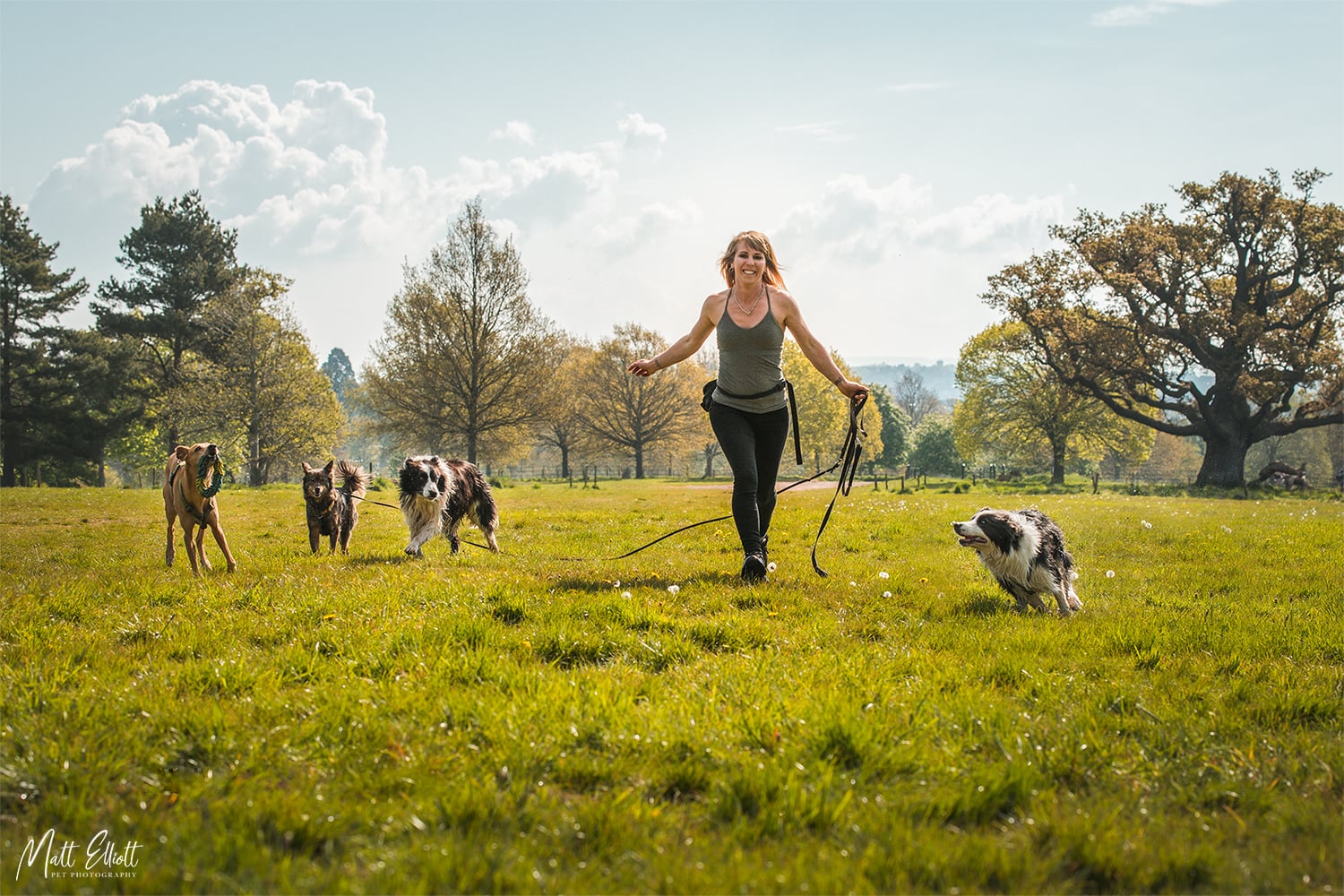
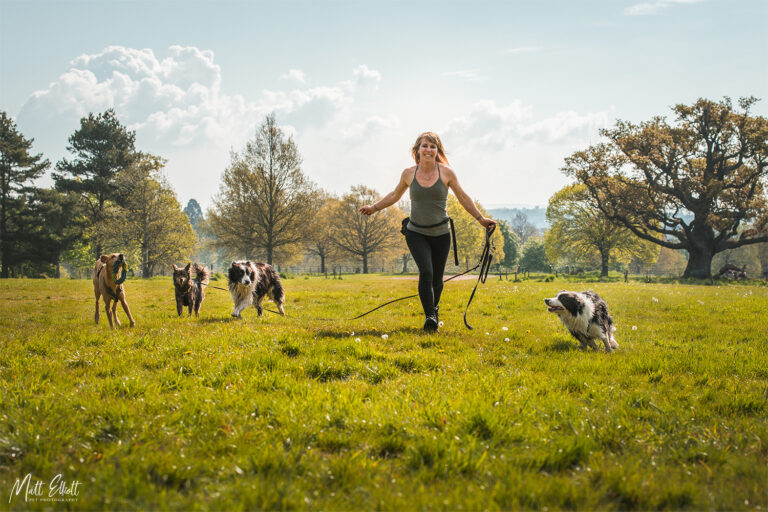
Another option is finding a good group walker, carefully vetted, who understands healthy group dynamics and knows how to support and manage appropriate interactions.
What else you can do to help your dog
Teach that not every dog is for socialising
Your dog needs to learn that not every dog is an opportunity for interaction. Help your dog practise walking calmly past other dogs or recalling away from them. This often needs to be practised at greater distances before dogs can reliably respond up close.
Avoid challenging situations while skills develop
Avoid putting your dog into difficult situations before they have the skills to cope. Head-to-head encounters on narrow streets are challenging for many dogs. Crossing the road early is often the sensible option while skills are developing.
Even long term, while your dog may be able to cope with close passes, the other dog may not. Crossing the road is often a courteous choice for both dogs.
Learn to read other dogs
There is a difference between brief social “small talk” with a passing dog and deliberately approaching a dog who is minding their own business.
Learning how to pass unfamiliar dogs calmly is an important skill. This includes recognising when another dog is not interested and moving on.
Read other dogs early, assess their confidence and social motivation, and make decisions before avoidance becomes difficult. The fewer tense or unpleasant encounters dogs have, the less likely they are to develop a pessimistic mindset.
Minor grumbles will happen over a dog’s lifetime. Dogs can usually recover easily if these moments are infrequent and the majority of their social experiences are positive.
Work with your dog’s individual social needs
Some dogs, particularly working line breeds, are more task-focused and prefer doing their own thing rather than interacting with other dogs.
Some dogs are socially selective, which is normal in adult dogs. Others may be intolerant of unsolicited social interactions.
These dogs can still benefit from sharing space with others on walks, without being forced into close or intense social interactions. Finding suitable dogs they can comfortably coexist with, even while doing their own thing, is often beneficial.
Avoidance and a complete lack of practice sharing space will not increase tolerance, but neither will overwhelming dogs with unsuitable social experiences.
Some dogs are simply harder to socialise. Large, strong, excitable dogs, or dogs who look or behave in certain ways, may require more thoughtful management when facilitating friendships.
In summary
Build quality social circles with well-matched dogs and meet up with dog friends as frequently as possible. As your dog’s confidence and social skills improve, you will need to be less proactive over time.
Proactively read and manage your dog’s walks, especially in the early stages.
Train loose lead walking and a reliable recall to reduce frustration, support regulation, and help your dog disengage from dogs who are not a good match.