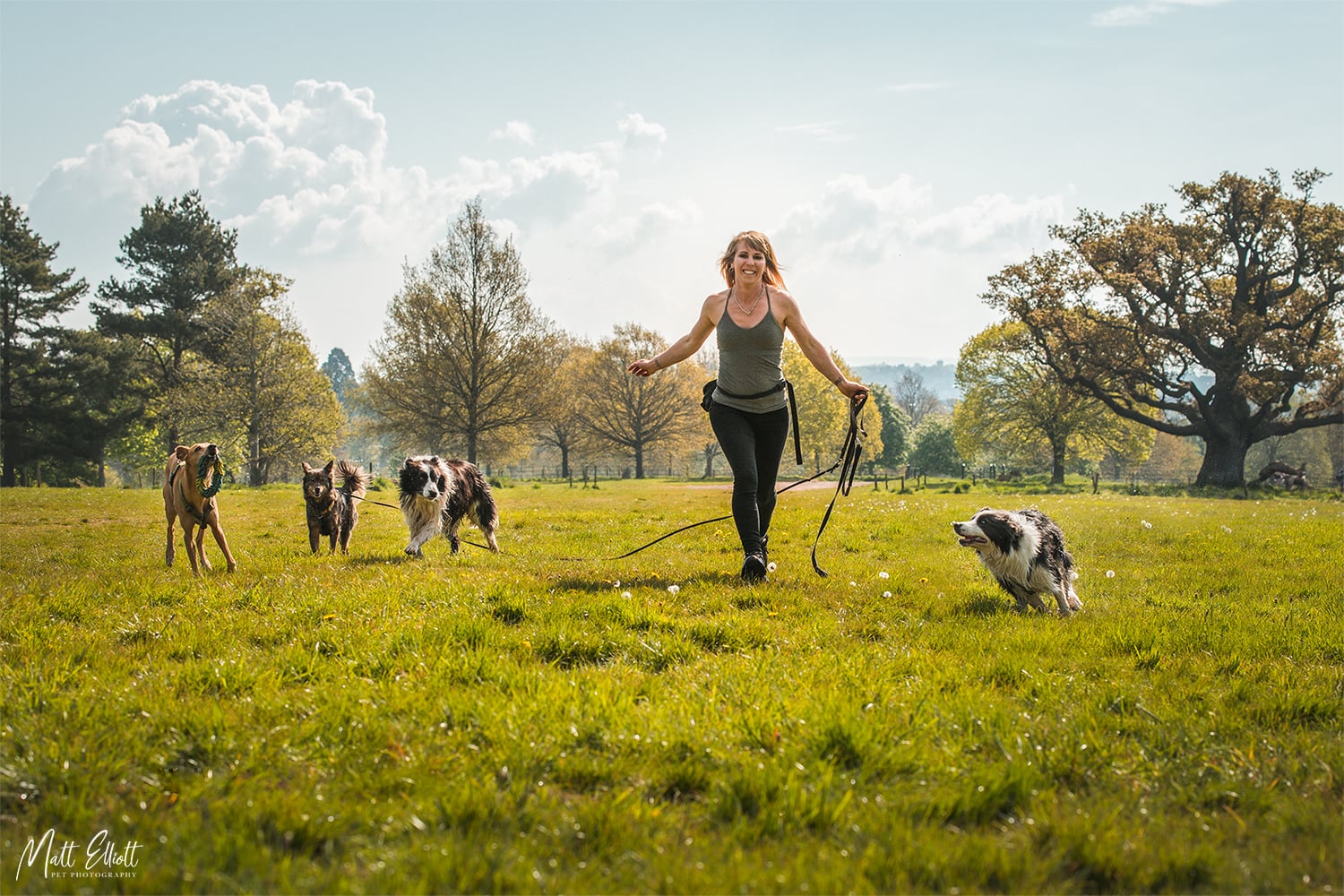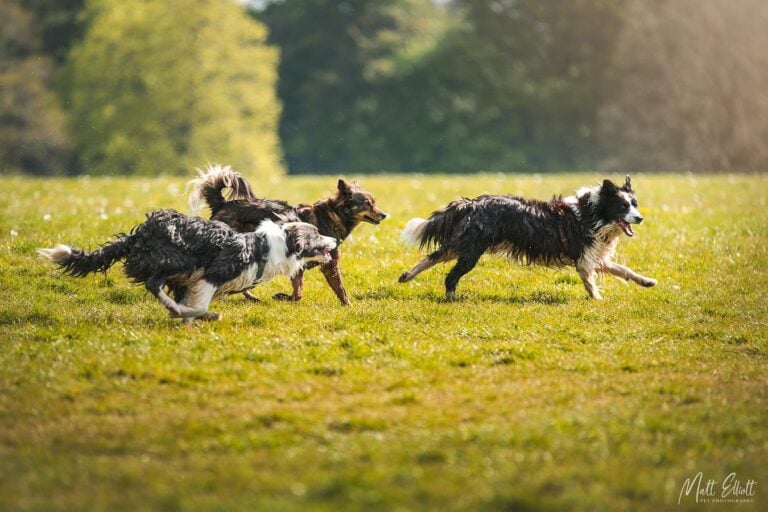
I’ve had seven dogs to date, six of whom were rescues, most with a tricky, traumatic past. Whilst Kanita may not be considered “easy” by some, I personally don’t see her as a problem dog.
I don’t know whether it’s because I know how to pick them (nature), or whether it’s due to how I raise my dogs (nurture), but all of them are (or have been) largely free from serious behaviour issues. They’re not perfect by any means. I work with enough clients to know that sometimes, no matter how carefully we choose a dog or how much we invest in their wellbeing, challenges can still arise.
I also recognise that my circumstances play a role. I’m able-bodied, child-free, self-employed, live close to the countryside, and drive. Not everyone can follow all of these approaches, and that’s okay. But if this gives you a few ideas to take forward, then it’s worthwhile.
Here’s what I do to support my dogs’ health and behaviour.
Walks
I avoid really busy dog parks. Instead, I choose quieter locations where my dogs are less likely to encounter lots of unfamiliar dogs and people.
I pay attention to which dogs are a good fit for mine and which are not, and I act proactively to avoid unsuitable interactions.
My dogs are walked twice a day, and I rotate between a handful of familiar locations. This allows me to understand each environment well, manage my dogs effectively, and give them more freedom where appropriate. It also helps me learn which regular dogs are suitable for social interaction.
I only do a couple of street walks each week to avoid overwhelming them with traffic and noise.
We regularly meet up with known dog friends and their owners for walks.
My dogs experience both off-lead and on-lead walks. This helps them practise recall as well as lead skills, although they are mostly walked off lead.
I use high-value rewards to reinforce behaviours, but I also use myself as a reward, through interaction, praise, and connection.
I avoid constantly cueing or “nagging” my dogs. Instead, I deliberately choose environments where they can succeed with minimal intervention.
Sniffing and exploring are encouraged. They are given time to be dogs.
I also make time to walk each dog individually, rather than always as a group.
Diet
My dogs are fed a fresh, minimally processed diet with plenty of variety, including appropriate whole foods. They don’t receive scraps directly from our plates, but safe leftovers may be given separately.
They have something to chew every day, including raw meaty bones once or twice a week.
I don’t use their full daily food allowance for training. They receive two meals a day without having to “earn” them. There’s no requirement to sit or wait, the bowl is simply put down. Food is not transactional.
That said, their meal portions are slightly reduced, as they receive treats throughout the day for good choices.
I feed breakfast well before their walk, typically 2 to 3 hours earlier, so they have energy for the day ahead.
Rest, sleep and alone time
I don’t crate my dogs. They have freedom of choice around where they rest.
They can sleep in our room or elsewhere, depending on their preference.
They have a range of resting spots, including access to the sofa.
Most days include a shared rest period, even if it’s just 15 minutes. This quiet, connected time is something we all value.
I make a conscious effort to balance busy days with proper rest and recovery.
I’m very aware of how long my dogs are left alone. I aim to keep this within 3 to 4 hours where possible, and no longer than 4 to 5 hours.
I also consider how household activity levels affect them. I try to create calm, quiet periods throughout the day.
They have enough space to move away from one another, or from us, if they need to. I pay attention to when they need peace and help facilitate that.
Relationships and interactions
I make a conscious effort not to tell my dogs off. On the rare occasions I do, it’s usually due to an emergency or my own stress levels, not their failure.
I don’t use “no” or verbal interrupters like “ah ah”. Instead, I focus on teaching what I do want, reinforcing good choices, managing the environment, and interrupting unwanted behaviour calmly or playfully where appropriate.
I interact with my dogs in a light, positive way. There’s laughter, playfulness, and connection. I’m also mindful of when they need calm and quiet.
I don’t use physical corrections or aversive tools. My dogs are walked on harnesses to protect their necks and to prevent discomfort from sudden lead pressure.
Each dog receives individual affection and attention every day, if they choose it.
I provide mental stimulation through training sessions around five times a week, both at home and on walks. Additional training happens naturally through everyday interactions like recall, lead work, and waiting in the car.
I don’t force my dogs into situations they find difficult. Instead, I work to help them cope with necessary tasks, like nail trimming, in a way that feels safe and manageable.
I advocate for my dogs. That may mean guiding how others interact with them, asking for space, or choosing not to put them in certain situations at all. It also means I don’t take them everywhere, some environments simply aren’t suitable for them.
I assess how each dog is feeling day to day and adjust accordingly.
I also check in with myself. If I’m tired or stressed, I take steps to reset so that I don’t pass that tension onto my dogs.
I don’t rely heavily on high-intensity play like tug or ball games. These are used occasionally as rewards, but not daily. I also avoid these activities in the house, as I want the home environment to be associated with calm behaviour, particularly important in a multi-dog household.
A final note
This isn’t a checklist for “good dog ownership,” and it’s not meant to be followed perfectly. We don’t all share the same circumstances, so I do not wish for people to think this is a ‘do this or you’re a bad dog parent’ list!
But hopefully there are some things I do that may give you some ideas on changes you may be able to also make!